Taxes for sole proprietors, freelancers and gig workers
Self-Employed Tax Accountant in London, Ontario
A&P Accounting & Tax Experts prepares tax returns for people who work for themselves: freelancers and consultants, electricians and other trades, realtors, hairstylists, and rideshare and delivery drivers across London. If your income arrives without a T4, we turn the year’s deposits and receipts into a correct Form T2125 and a return you understand.
Self-employed taxes in Canada involve more than one form. We handle the business statement, CPP on your profit, GST/HST registration and returns, and the quarterly instalments the CRA asks for once your balance grows.
Sole proprietor returns are where we see the most avoidable mistakes, from a vehicle claimed with no logbook to HST collected but never remitted. Our job is to catch those before the CRA does.
- 5.0 stars on Google
- Downtown London office
- In person or fully online
- Open Saturdays
What we handle
Our Self-Employed and Sole Proprietor Tax Services
A sole proprietor reports business income on Form T2125, Statement of Business or Professional Activities, which is filed as part of the personal T1 return. The net profit is added to any other income you earned and taxed at your personal rates, which is why a good T2125 is really about the full return.
Our self-employed service includes the T2125, CPP calculations, GST/HST filings and an instalment plan, all coordinated so they agree with each other. The CRA’s guide to reporting business income and expenses sets the rules we work from.
Business Income and Expenses on Form T2125
We report gross sales, subtract cost of goods sold if you sell products, then deduct operating expenses such as supplies, advertising, subcontractors and insurance. Tools, computers and equipment go through capital cost allowance, the multi-year write-off for capital assets, with each item placed in its correct CCA class.
Since 2024, platforms such as rideshare, delivery and short-term rental apps report seller income directly to the CRA, so the T2125 needs to reconcile to those figures.
Home Office and Vehicle Expenses
A home workspace qualifies when it is your principal place of business or used only for business and regularly for meeting clients. Vehicle costs are split by business kilometres, which the CRA expects you to support with a logbook showing the date, destination, purpose and distance of each trip.
Driving from home to a regular work site is usually personal commuting, a rule that catches many trades.
CPP Contributions on Self-Employment Income
Self-employed people pay both the employee and employer shares of the Canada Pension Plan. For 2026, that is 11.9% of net earnings between $3,500 and $74,600, a maximum of $8,460.90, plus a second-tier CPP2 contribution of 8% on earnings between $74,600 and $85,000, a maximum of $832.
Roughly half is deductible from income and the rest earns a tax credit, so the true cost is lower than the headline figure.
Tax Instalments for the Self-Employed
The CRA asks for quarterly instalments when your net tax owing is more than $3,000 in the current year and in either of the two previous years. Payments are due March 15, June 15, September 15 and December 15.
Missed or late instalments attract interest, so we set an amount based on your expected profit and adjust it when the year changes course.
Your business is growing. Is your tax plan keeping up?
Call for a fixed quote on your T2125, HST and instalments in one conversation.
Get organized
Records That Make a Self-Employed Return Easier
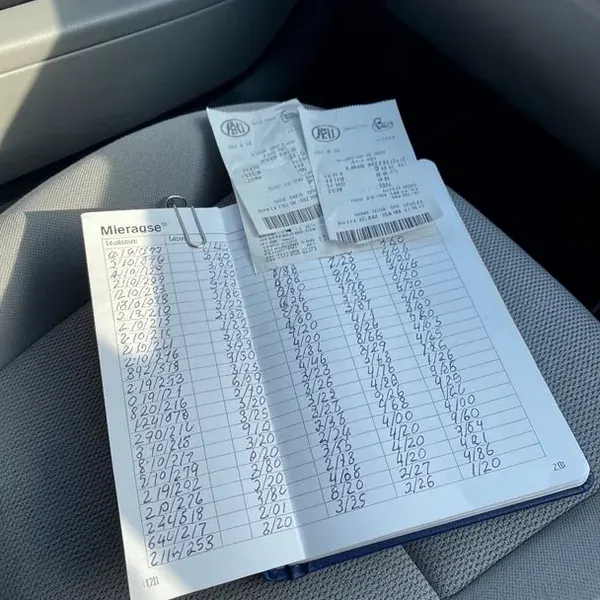
Clean records make a self-employed return faster, cheaper and far safer in a CRA review. The two most common problems we see are missing receipts and one bank account used for both business and household spending.
A simple system fixes both, and it takes less effort than a shoebox scramble every April.
- A separate business bank account and credit card. Every business transaction in one place, nothing personal to untangle.
- A receipt capture app. Photograph receipts the day you get them; thermal paper fades within months.
- A mileage log. A phone app or notebook in the glovebox recording each business trip. After one full year, a three-month sample can support later years if your driving pattern stays similar.
- Simple bookkeeping software. QuickBooks Online or Xero linked to your bank feed, or a well-kept spreadsheet for very small operations.
If the year is already a mess, our bookkeeping services for London sole proprietors can sort it before the return is prepared.
Sales tax
When You Need to Register for GST/HST
You must register for GST/HST once your taxable sales pass $30,000 in a single calendar quarter or over four consecutive quarters. Under that threshold you are a small supplier and registration is optional.
There is one major exception: taxi and commercial rideshare drivers must register from their very first dollar of fares. Food and parcel delivery drivers follow the normal $30,000 rule.
Charging 13% HST
Once registered in Ontario, you charge 13% HST on most sales and file returns annually, quarterly or monthly depending on revenue.
Claiming Input Tax Credits
Registration lets you recover HST paid on business expenses, which can make voluntary registration worthwhile for some new businesses.
The Quick Method Option
Smaller service businesses can elect the Quick Method, remitting a reduced flat percentage of sales instead of tracking every credit.
We register you through the CRA, set your filing frequency and prepare each return through our GST/HST return filing for Ontario businesses.
Choosing a structure
Sole Proprietor or Corporation?
Staying a sole proprietor is simpler and cheaper, while incorporating usually pays off only once you earn more than you need to live on. The tax saving comes from leaving profit in the corporation at the small business rate instead of paying personal rates on all of it.
| Factor | Sole proprietor | Corporation |
|---|---|---|
| Tax rate on profit | Personal marginal rates, topping out above 53% in Ontario | Combined small business rate of 12.2%, reduced to 11.2% from July 1, 2026, on the first $500,000 of active business income kept in the company |
| Paperwork | T1 return with Form T2125 | T2 return, financial statements, Ontario annual return, minute book, plus your personal return |
| Liability | You are personally liable for business debts | Limited liability, although lenders often require a personal guarantee |
| CPP | Both shares on all net profit | Only on salary you pay yourself; none on dividends |
| Losses | Offset your other personal income | Stay in the corporation |
| Annual cost | One personal return with a business schedule | Incorporation costs, then T2 preparation that typically starts around $1,500 in London |
If you are weighing the move, our Ontario business incorporation service runs the numbers on your actual profit before you commit.
Our process
How We Prepare Your Self-Employed Return
A reliable self-employed return starts with the books, not the tax software. Here is how we take a year of business activity from bank statements to a filed return.
Bookkeeping Review or Clean-Up
We categorize the year’s transactions, separate personal spending, reconcile to your bank and card statements and confirm sales against invoices and platform reports.
Expense and Deduction Review
We look for the claims people miss: the business share of your phone and internet, software subscriptions, professional and licensing dues, bank fees, business insurance and last year’s accounting fees.
Filing by June 15 and Paying by April 30
Self-employed filers have until June 15 to file, but any balance owing is due April 30. Interest runs daily from May 1, so we give you the number in April even if the return files later.
The interest trap: many sole proprietors assume June 15 is their payment deadline too. It is not, and six weeks of compound daily interest on a large balance is money spent for nothing.
Do not let June 15 sneak up on you
Call our London office in the spring and we will have your balance worked out before April 30.
Pricing
Self-Employed Tax Return Cost
A self-employed return costs more than a basic T4 return because there is a business statement to build, but the biggest factor is the state of your records. Organized books mean we review and file; a shoebox means we build the books first.
Books or Shoebox
Reconciled QuickBooks or Xero files take a fraction of the time of loose receipts and twelve months of bank statements.
HST Returns
An annual GST/HST return with input tax credits adds work, and quarterly filers need it four times a year.
Number of Income Streams
Two businesses, a rental and employment income on one return each add schedules and reconciliation.
We quote a fixed fee once we have seen your records. Our fees for London tax and accounting services explain how each type of work is priced.
Why us
Why Self-Employed Londoners Work With A&P
Self-employed clients usually come to us after a year that went sideways: an unexpected balance owing, a CRA letter asking for vehicle logs or an HST registration that should have happened months ago. They stay because the next year runs smoothly.
One Team for T2125, HST and Instalments
Your income tax, sales tax and instalments are planned together, so the numbers on each filing match.
Saturday Appointments for Busy Owners
Our office is open Saturdays from 10 a.m. to 3 p.m., which suits people who run their business during the week.
Ready if the CRA Asks
We file returns we can support, and we help you answer if the CRA requests receipts or logs.
Rated 5.0 on Google
All 11 of our Google reviews are five stars, with clear explanations and responsiveness mentioned again and again.
Self-Employed Tax FAQs
What can I deduct as a self-employed person in Ontario?
You can deduct any reasonable expense you incurred to earn business income, as long as it is not personal or capital in nature. Common examples are supplies, software subscriptions, advertising, professional dues, business insurance, accounting fees, bank charges, the business share of your phone, internet, vehicle and home, and 50% of client meals and entertainment.
Equipment, computers and vehicles are capital purchases, so they are written off over several years through capital cost allowance rather than deducted in full. HST you pay on expenses is either claimed back as an input tax credit, if you are registered, or included in the expense if you are not.
Can I claim my home office?
Yes, if the workspace is your principal place of business, or you use it only for business and regularly meet clients there. You then deduct the business-use share, usually based on square footage, of rent or mortgage interest, utilities, home insurance, property tax and maintenance.
Home office expenses cannot create or increase a business loss. Any amount you cannot use carries forward to the next year.
What if I didn't keep all my receipts?
Missing receipts can usually be reconstructed from bank and credit card statements, supplier account histories, invoices and calendar entries. We rebuild the year from those records and claim only what can be reasonably supported.
Be aware that a statement line alone is weaker evidence than a receipt if the CRA reviews the return, so start keeping receipts going forward. The CRA expects records to be kept for six years from the end of the tax year they relate to.
Do I need to file if my side business lost money?
Yes. Report the loss on Form T2125, because a business loss can offset your employment and other income for the year, and unused losses can be carried back three years or forward twenty.
The activity has to be a genuine business carried on in a commercial manner with a pursuit of profit. A hobby that loses money year after year is a common target for CRA reviews, so we look at how the activity is run before claiming a loss.
Keep exploring
Related Services and Areas We Serve
Most sole proprietors need more than a once-a-year return as the business grows. These services and service areas are the natural next steps for self-employed clients.
Bookkeeping for Small Businesses
Monthly or catch-up bookkeeping in QuickBooks Online or Xero so your T2125 builds itself.
GST/HST Registration and Returns
Registration, 13% HST returns and input tax credits for Ontario sole proprietors.
Incorporating Your Business
When profit outgrows your personal needs, an Ontario or federal corporation may save tax.
Self-Employed Tax Help in Komoka
Contractors and home-based businesses in Komoka and Middlesex Centre.
Sole Proprietors in Dorchester and Thames Centre
Trades and service businesses east of London along Highway 401.
Self-Employed Returns for Woodstock
Oxford County freelancers, drivers and trades filing online or in person.
Talk to a Self-Employed Tax Accountant Today
Tell us what your business does and how your records are kept. We will tell you what the return involves and quote a fixed fee before any work starts.