
Proactive tax strategy, not just tax filing
Tax Planning in London, Ontario for Families and Business Owners
Real tax savings are decided before December 31, not in April. By the time you sit down to file, the year is closed and most of the levers are gone. A&P Accounting & Tax Experts helps London households and owner-managers pull those levers while they still work.
Planning pays off most for incorporated business owners choosing between salary and dividends, landlords thinking about selling, and pre-retirees deciding when to draw on RRSPs, pensions and CPP. Families juggling RRSP, TFSA and FHSA contributions also get real value from a second set of eyes.
Because we prepare the T1 and T2 returns that your plan will eventually land on, our recommendations are built from the actual numbers, not rules of thumb. You get a projection, a ranked list of options and a clear explanation of the trade-offs behind each one.
- 5.0 stars on Google
- Downtown London office
- In person or fully online
- Open Saturdays
What we plan
Our Tax Planning Services
Good tax planning looks different for a two-income family in Byron than it does for a contractor with a corporation and a rental property. Whether you want to keep more of your paycheque, pay yourself smarter from your company or sell an asset without an ugly surprise, the work starts with your real numbers.
Personal Tax Planning
The question is rarely “should I save?” but “where should this dollar go first?” An RRSP gives a deduction now and taxes the money later, a TFSA gives no deduction but tax-free growth, and a First Home Savings Account (FHSA) does both for a first home.
For 2026 the RRSP limit is 18% of your 2025 earned income up to $33,810, the TFSA limit is $7,000 and the FHSA allows $8,000 a year to a $40,000 lifetime cap. We also plan pension income splitting on Form T1032, spousal RRSPs and charitable gifts so the donation credit lands on the right return.
Owner-Manager Compensation Planning
Salary, dividends or a mix is the most important tax decision an incorporated owner makes each year. Salary is deductible to the company, builds RRSP room and CPP pension credits, but requires payroll remittances and T4 slips.
Dividends skip CPP and payroll but create no RRSP room and are paid from after-tax corporate profits. We model both for your situation and tie the result into your T2 corporate tax return and year-end statements.
Capital Gains and Property Sales
Capital gains tax in Canada applies to only half of the gain: the 50% inclusion rate stands after the proposed increase to two-thirds was cancelled in March 2025. Timing a sale across two calendar years, or pairing it with losses, can still change the bill a great deal.
Selling a home usually qualifies for the principal residence exemption, but the sale must still be reported and designated on Schedule 3 and Form T2091. Selling a rental is different: past capital cost allowance (CCA) can be “recaptured” and taxed as full income on top of the capital gain.
Corporate Year-End Planning
A corporation’s fiscal year-end is the deadline for most business tax moves. Before it, we review whether to declare a bonus (deductible now if paid within 180 days of year-end), buy equipment, pay down a shareholder loan or hold income in the company.
We also watch the passive income grind: once a corporation earns more than $50,000 of investment income, its access to the small business rate (a combined 11.2% in Ontario since July 1, 2026) on the first $500,000 of active income starts to shrink, and it disappears at $150,000.
The best planning window closes December 31
Call before year-end and we will look at what can still move for 2026.
2026 rates
Ontario Tax Brackets and Rates That Shape Your Plan
Your marginal tax rate, the rate on your next dollar of income, drives nearly every planning decision. A $5,000 RRSP contribution saves about $1,483 at a 29.65% marginal rate but more than $2,170 at 43.41%, which is why the same move can be smart for one spouse and pointless for the other.
The 2026 federal and Ontario brackets below are indexed for inflation and apply to returns filed in spring 2027. The federal lowest rate is now 14%, down from 15% before July 2025.
2026 federal tax brackets
| Taxable income | Federal rate |
|---|---|
| Up to $58,523 | 14% |
| $58,523 to $117,045 | 20.5% |
| $117,045 to $181,440 | 26% |
| $181,440 to $258,482 | 29% |
| Over $258,482 | 33% |
2026 Ontario tax brackets
| Taxable income | Ontario rate |
|---|---|
| Up to $53,891 | 5.05% |
| $53,891 to $107,785 | 9.15% |
| $107,785 to $150,000 | 11.16% |
| $150,000 to $220,000 | 12.16% |
| Over $220,000 | 13.16% |
Combined 2026 marginal rates for Ontario residents
Combined rates add federal and Ontario tax together, including the Ontario surtax that starts at about $94,907 of taxable income. Capital gains rates apply to the whole gain, and dividend rates apply to the cash dividend received.
| 2026 taxable income | Salary and interest | Capital gains | Eligible dividends | Non-eligible dividends |
|---|---|---|---|---|
| Up to $53,891 | 19.05% | 9.53% | -8.24% | 8.09% |
| $58,523 to $94,907 | 29.65% | 14.83% | 6.39% | 20.28% |
| $117,045 to $150,000 | 43.41% | 21.70% | 25.38% | 36.10% |
| $181,440 to $220,000 | 48.26% | 24.13% | 32.07% | 41.68% |
| Over $258,482 | 53.53% | 26.76% | 39.34% | 47.74% |
Selected brackets shown. Rates exclude the Ontario Health Premium and are based on CRA’s published 2026 payroll formulas. Source: Canada Revenue Agency income tax rates.
Options and trade-offs
Tax Planning Strategies We Use
No single strategy suits everyone, and some that look clever on paper cost more in fees or complexity than they save. These are the tools we reach for most often with London families and business owners, along with the catch that comes with each one.
Income Splitting Within the TOSI Rules
The tax on split income (TOSI) rules tax most private company dividends paid to family members at the top rate unless an exception applies. Exceptions still exist: a spouse of an owner aged 65 or older, an adult family member who works in the business an average of 20 hours a week, or a shareholder 25 or older holding at least 10% of the votes and value of a non-service corporation.
Outside a corporation, pension income splitting, spousal RRSPs and prescribed rate loans remain the cleanest ways to shift income to a lower-earning spouse.
Holding Companies
A holding company makes sense when your operating company earns more than you spend personally and you want to move surplus cash away from business creditors. Dividends between connected Canadian corporations generally flow tax-free, so profits can be invested at the corporate level.
The trade-offs are a second T2 return every year, legal set-up costs and passive income that can erode the small business rate. Our business incorporation service in Ontario covers the set-up once the numbers support it.
Timing Income, Deductions and Asset Purchases
When you buy equipment, a vehicle or a building matters. Capital cost allowance normally follows the half-year rule, which allows only half the usual CCA in the year of purchase.
Budget 2025 legislation, which received Royal Assent in March 2026, reinstated the Accelerated Investment Incentive for eligible property, lifting the half-year rule and allowing a larger first-year write-off. Pairing a purchase with a high-income year, or deferring a bonus into a lower one, can shift thousands of dollars.
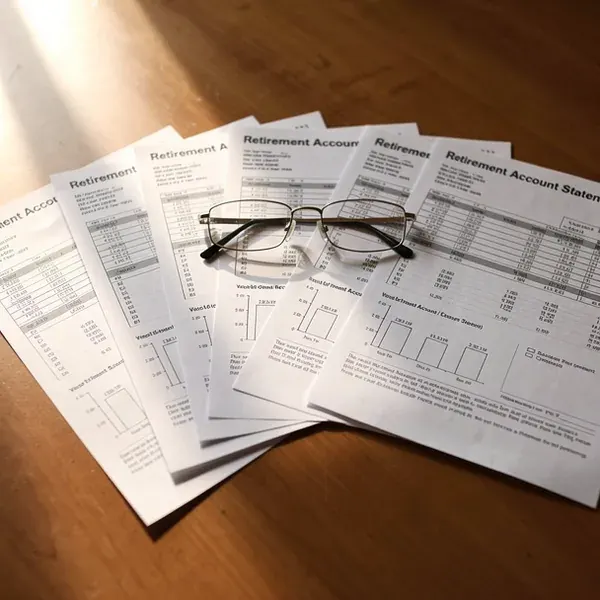
RRSP Withdrawals and Withholding Tax
An RRSP withdrawal is fully taxable as income in the year you take it out. Outside Quebec, your financial institution withholds 10% on amounts up to $5,000, 20% on $5,000 to $15,000 and 30% on anything above $15,000.
That withholding is only a down payment. If your marginal rate is higher, you will owe the difference in April; if it is lower, you get some back. Contribution room used by the withdrawn money is also gone for good.
- Several small withdrawals reduce withholding but not the final tax
- Low-income years, such as a sabbatical or early retirement, are the cheapest time to draw
- The Home Buyers’ Plan allows up to $60,000 tax-free for a first home, repayable over 15 years
- RRSPs must be converted to a RRIF or annuity by the end of the year you turn 71
How it works
Our Tax Planning Process
Planning is a conversation, then a calculation, then a decision. You stay in control of every choice, and we make sure each one is backed by numbers you can see.
Discovery Meeting
We go through your income sources, assets, corporate structure, family situation and goals, and pull your last two Notices of Assessment and RRSP room from CRA My Account.
Tax Projection
We model this year and next under your current path, then rerun the numbers for each option so you can see the tax difference in dollars.
Written Recommendations
You receive a short written summary ranked by dollar impact, with deadlines and the paperwork each step needs.
Implementation and Annual Review
We coordinate with your financial advisor or lawyer, carry the plan into your T1 or T2 filing and revisit it each fall when rules and income change.
Wondering whether salary or dividends wins this year?
Call our London office and we will quote a projection built on your company’s real numbers.
Fees
What Tax Planning Costs
Tax planning is quoted as a flat project fee, or bundled into your annual T2 and personal returns when we already handle your corporate work. Either way, you know the price before we start.
The fee depends on how many people and entities are involved, whether a property sale or reorganization is on the table, and how much modelling the decision needs. A one-time RRSP versus TFSA review for a couple is a much smaller job than a multi-year compensation plan for a corporation with a holding company.
See our accounting and tax fees in London for what drives the cost of each service, then call for a fixed quote on your situation.
The A&P difference
Why Plan Your Taxes With A&P
A plan is only as good as the return it ends up on. Clients tell us they value having the same people who build the projection also file the return, so nothing gets lost between the advice and the paperwork.
Advice Tied to Your Actual Returns
We start from your filed T1 and T2 data, CRA account details and real slips, so a recommendation never assumes room or income you do not have.
Plain-Language Trade-Offs
Every option comes with the catch spelled out: what it saves, what it costs and what it locks you into.
Five-Star Client Reviews
We hold a 5.0-star Google rating from 11 reviews. Clients most often mention clear explanations, attention to detail and quick replies.
Meet in Person or Online
Sit down with us on Wellington Street in downtown London or share documents through our secure client portal and talk by phone or video.
Tax Planning FAQs
When is the best time to do tax planning?
The best time is in the fall, well before December 31. Most of the moves that lower a tax bill, such as donations, tax-loss selling, owner bonuses and equipment purchases, only count if they happen inside the calendar or fiscal year.
The one big exception is your RRSP: contributions made in the first 60 days of the new year (up to March 1, 2027 for the 2026 tax year) can still be deducted on the prior year’s return.
How is capital gains tax calculated in Canada?
Half of a capital gain is added to your income and taxed at your marginal rate. If you sell shares for $40,000 more than you paid, $20,000 is taxable; at Ontario’s 43.41% marginal rate on 2026 income between $117,045 and $150,000, that is about $8,682 of tax.
The gain is the selling price minus your adjusted cost base (what you paid plus purchase costs) and selling expenses. Losses can offset gains in the same year, be carried back three years or carried forward indefinitely.
How much tax do I pay when I withdraw from my RRSP?
Your bank withholds 10% on withdrawals up to $5,000, 20% on $5,000 to $15,000 and 30% above $15,000, but that is only a prepayment. The full withdrawal is added to your income for the year and taxed at your marginal rate, so you may owe more, or get some back, when you file.
Withdrawals under the Home Buyers’ Plan or Lifelong Learning Plan are not subject to withholding as long as you follow the repayment rules.
Is an accountant the same as a financial planner?
No. An accountant focuses on tax: projecting what you will owe, structuring income and filing the returns. A financial planner focuses on savings goals, investment allocation, insurance and retirement income.
The two work best together. We model the tax effect of the options your planner or advisor is weighing, and we do not sell investments or recommend specific products.
Keep exploring
Related Services and Areas We Serve
Planning connects to almost everything else we do, from the corporate return that carries out your compensation plan to the estate filings your plan should anticipate. We also work with owner-managers and families well beyond London.
Corporate Tax Returns (T2)
Your salary and dividend decisions, bonus accruals and CCA claims all land on the T2. Our corporate tax returns for Ontario businesses carry the plan through to filing.
Estate and Trust Tax Returns
The deemed disposition at death is often the largest tax bill a family faces. Our estate tax return service helps executors, and planning ahead reduces what they inherit.
Business Incorporation
When planning shows a corporation or holding company makes sense, we handle Ontario or federal incorporation and CRA program accounts.
Tax Planning for Ingersoll
Accounting and tax planning for Ingersoll families and owner-managers, about 25 minutes from our office along Highway 401.
Tax Planning for Woodstock
Year-end and compensation planning for Woodstock business owners, available in person or fully online.
Tax Planning for St. Thomas
RRSP, pension and capital gains planning for St. Thomas and Elgin County households, a short drive up Highway 4.
Start Your Tax Plan Before Year-End
Tell us what is on your mind, whether that is a property sale, a first home, retirement or paying yourself from your company, and we will tell you what a plan involves and what it costs. Calls are answered Monday to Friday from 9 a.m. to 6 p.m. and Saturdays from 10 a.m. to 3 p.m.